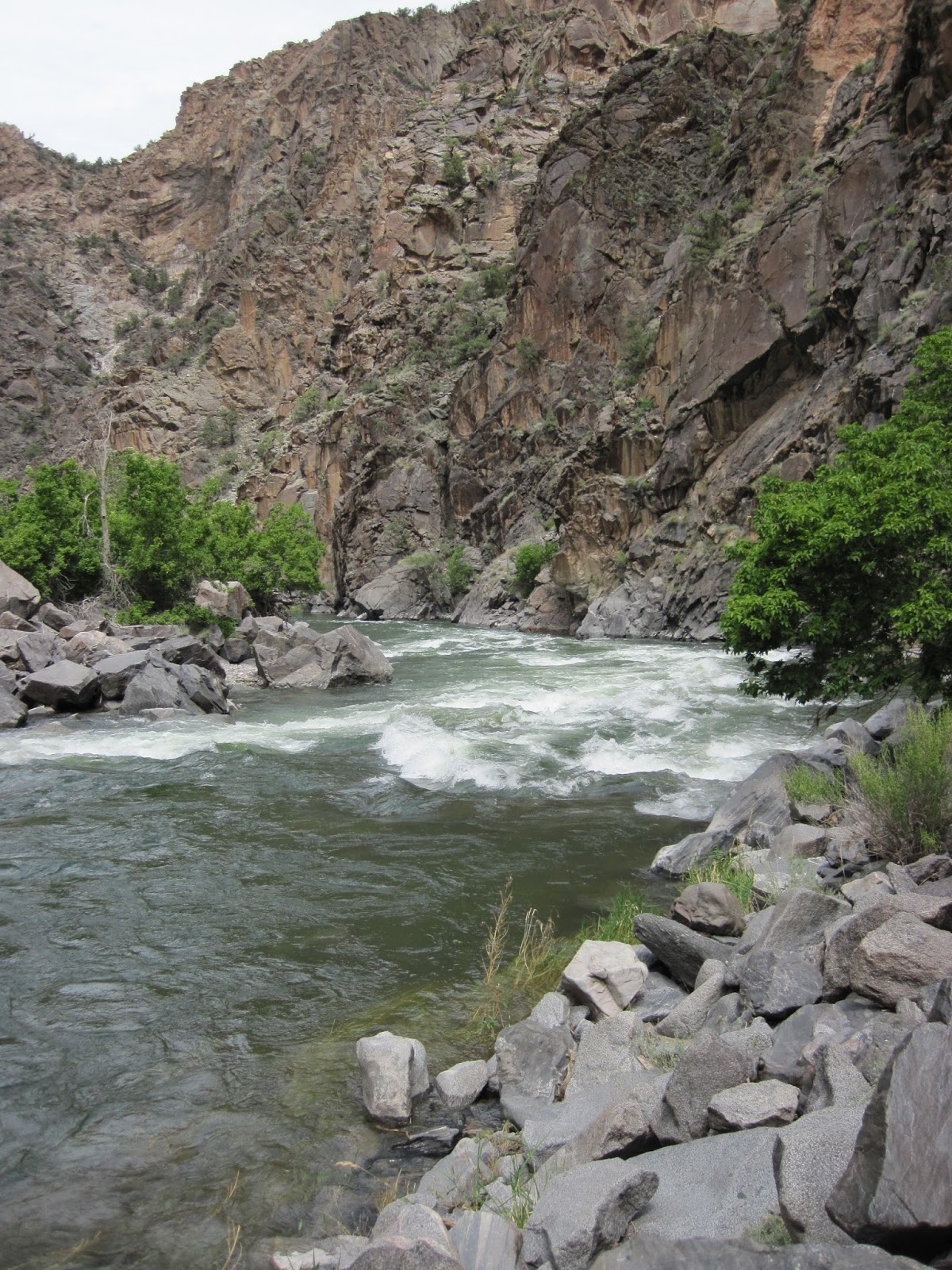
So when Robert and I pulled off the Gunnison we where trying to figure out where to go fish. We decided to head south of Montrose to the Pa-Co-Chu-Puk tailwaters. We had a few hours left in the evening to try our luck. Needless to say this place wasn't what we were looking for. Its pretty much Beaversbend State Park in Colorado. Lots of people and a very artificial fishery. Robert and I knew we didn't come to Colorado to fish this type of water. That evening we had dinner at an Applebees, tried to figure up a plan and headed back east towards Gunnison to spend the night. That morning we got up and headed to one of the local flyshops asked around and tried to come up with some fishing spots. We weren't really feeling any of the options. Robert knows the Conejos River pretty well and we figured that was our best bet. It was about a 3 hour drive but we got there pretty quick and were able to get on the water and into a few fish by evening. The next morning we got up and hiked into some high mountain ponds that were loaded up with cuttthroats. We fished to early afternoon, loaded up and headed back home.
I don't want to call it a bad trip but a lot of things just didn't seem to want to fall into place on this trip. High water, close calls, oil light in the truck coming on and worrying about car trouble 900 miles from home. Broken rods; ya somehow on the last day my BVK just snapped in the middle of a cast, Getting a new star on the windshield from a rock getting kicked up by the truck in front of me. Not seeing a large piece of tire tread laying in the road at night; luckily the only damage was to the step up on the truck. I'm sure there is other smaller annoyance that I have forgotten about by now.
Not sure where to begin the story about day 2. The night was mild, not nearly as cool as I thought it was going to be. I guess that was a good thing since my sleeping bag and all my clothes were wet from a leaking waterproof bag. Note to self, double check your bags for any holes or tears that may have happened during the pre-trip packing phase. We only had to go a few miles to reach camp for the second night which was camp # 22 Boulder Garden. Needless to say it didn't take long for us to realize that the high water was limiting our fishing time and pushing us down river much faster than we anticipated. Within just a few hours we where passing by the designated camp. Robert and I decided to go ahead and push through the Gorge and take out a day early. The rapids were getting gnarly many strong class III and IV and frankly they were pretty intimidating. All the research I had done about the Gorge everyone kept saying the only rapid we really needed to worry about was the one called Cable. On the map Cable is rated as a class IV, needless to say the anxiety was building as we approached this rapid. We skirted, lined and even at one point unpacked the raft and carried it over a set of boulders to avoid some rapids like Boulder Garden, S-Turn and The Drops. When we approached Cable we scouted it on the right hand side, there was no way around it and we knew we couldn't safely run it but had no other choice. Not sure how Cable got its name, maybe because its like there is an imaginary cable running across the river just waiting to clothes line you. Before we even had a chance Cable through us like a rag doll. I don't remember much after that, I remember coming up from under water and watching my glasses flutter away. I was on the upstream side of the raft trying to hang onto the side handle, Robert was hanging onto the front handle on the raft. The raft was upside down and at one point I tried to climb on top of the raft. With a paddle in one hand and heavy wading boots I didn't make it to far. The current was still strong and pushed us through 3 more sets of Class III rapids which I don't even really remember. I know Robert and I were in shock and panicking, with several times I had to tell my self to consciously breath. It was tough because we couldn't abandon the raft and head to shore since it was our only way out and we still had several miles to go before reaching the take out. We were pretty much in the heart of the Gorge and the banks were very steep, the water was deep, cold and the current was swift. I don't really know how long it took us, probably not nearly as long as it felt but we finally got the raft and our selves to the bank and out of the water. The sun was beating down on some black granite boulders that were retaining some heat for us to rest and warm back up on. We had all the gear tied down good so the only things we lost was a paddle, sunglasses and hats. The rods were stored in some PVC rod tubes that I had made. The good news was that was the last of the rapids and we were pretty much home free. I don't know if this was a nearly lost my life moment or not. It wasn't like we got sucked into an undertow or anything. I will say I have been in a lot of pucker situations over the years in the outdoors but always felt I still had control of the situation. This situation was completely different, it was the most helpless I had ever felt in the outdoors. Absolutely no control and at the mercy of God and it could have been a lot worse than it ended up being. We exited the Gorge and had a few files to the take out. Those last few miles were some of the best water we had seen on the entire trip. Unfortunately we had passed a lot of it up. We were done and wanted out at that point. We did stop and fish some of it. and within just a few minutes we landed some nice browns. We got back to the take out, pulled the truck down to the river and haphazardly just started throwing stuff into the bed. I do know there wasn't anything we could have done differently and I don't know anyone else I would have rather had paddling with me than Robert.
Day 1 started at Gunnison River Pleasure Park. They where running the shuttle for us to the trail head of Chukar Trail. Its roughly an hour drive to the trail head from their location. Their location will also be the take out. After getting signed in we started the 1 mile hike to the river. It required several breaks to let our legs rest and recovery but I think we made it down to the river in 35-40 minutes. We decided to rig up some rods and do a little fishing before getting the raft and other gear ready. No fish were landed but we each had a couple of bumps. We started our journey down river, taking our time, fishing and scouting the upcoming rapids. We only had 4-5 mile run to where camp was located for night one. The water was running at 2,000 CFS which is about double what it normally runs this time of year, late snow fall in May still had the water up. The scenery, experience and pleasure of being there was great but the fishing was a little on the slow side. I hooked into a large brown that was easily 20+ inches on a streamer. He jumped once and then went deep into a run and settled towards the bottom. I think I put to much pressure on him as the hook pulled loose after a quick 30-40 second fight. I would say that is my biggest fault in fishing for trout. I am use to putting a lot of heat on fish like striper, bass and carp. A trouts mouth is just to soft to put that kind of pressure on them and I have lost several big fish over the years by putting to much pressure on them early in the fight. Some of the rapids were pretty gnarly, strong class III's. We were able to skirt around most the bad stuff but the raft handled great. This was the first run for both Robert and I in the SOAR so we were both getting adjusted to how the raft handled. We made it to camp for the first night. Ute II is camp #17 and has a great view over looking the river on what would be a beautiful run at normal flows. At current flows the water was pretty high and flowing fast. I got a couple bumps swinging a streamer across the current but no hook ups. We had a mule deer doe and her fawns play across the river most the evening. Overall Robert and I were a little discouraged because the flows were high and it made fishing pretty difficult. Our drifts were quick and it seemed the fish were spread out do to the flows. We each caught a few fish but they were making us earn it.
Many refer to the Gunnison Gorge as the Black Canyon of the Gunnison. I suppose Black Canyon catches one's attention a little better than Gunnison Gorge. None the less the two parks are right next to each other. The Gunnison Gorge is one of Colorado's premier fly fishing destinations. This 14 miles section of gold medal waters has always caught my attention. With a legendary stonefly hatch, an abundance of large trout, a rugged double canyon of black granite and red sandstone walls, class III and IV white water and experiencing a billion year old canyon. The trip isn't necessarily remote or hard to get to it just takes a little bit of work and light packing. You have two options, pay an outfitter the bucks and have them put the trip together for you or as we did plan to do it yourself. The largest obstacle of the trip is getting all your gear down Chukar Trail. This 1 mile trail is thankfully all down hill but with a hundred pound pack on your back you better be in some decent shape. The bulk of the weight will be your white water raft. I have been researching raft for sometime as I want to start putting together remote wilderness float trips. I knew I wanted a frame-less raft, something that could handle class IV white water, could be packed and transported on a plane and most importantly stand up to any abuse it will be put through on demanding trips. I came acrossSOAR Canoes, after talking to several owners and the manufacturer I decided on the 14' Canyon model. Just so happens SOAR was running some great specials on some demo boats they had this spring. Weighing in at 62 lbs the rest of the packing had to be light and efficient. This isn't a trip that your going to have many amenities. You pack the essentials and do without the rest for the next 3 days. A few things the BLM does require each boat to carry is a patch/repair kit, first aid kit, extra life vest, extra paddle and wag bags to pack out your waste. I'll break up the other essentials I packed into categories.
Camping
Tent with rain fly, pillow, sleeping bag, sleeping pad, head lamp, multi tool/knife (leatherman), chap stick, camera, extra batteries, paracord, small roll of gorilla tape, dry bags to keep your gear from getting wet, have one bag that is designated for trash to pack everything out with you. Water proof sports watch to keep track of time.
Clothes
Its hot during the day and gets cool at night. I don't like sunscreen so I always wear sun protective clothes. Long pants, long sleeve shirts, sun gloves, buff and a hat. Since your gunna be in some white water and may take a swim leave the Costas at home and pick up a decent cheap pair of polarized sun glasses.
Food/Water
MRE's may not be for everyone but I think they are the easiest way to have a complete meal for the day without worrying about anything. Don't have to boil water to re hydrate the meal and they are sealed in a waterproof pack. They also come with matches, toilet paper and gum in each package. Canteen and filtration pump. I use a MSR filtration pump and make sure to bring some electrolyte mixes. The best is powdered pedialyte, most backpacking store like REI also sell electrolyte tablets in varying flavors. No fires allowed in the Gorge so bring a jet boil if your going the dehydrated food route.
Fishing
10' 4wt and a 9' 5wt are the rods I packed, 3x, 4x, and 5x flouro tippet, 7.5 and 9' 3x leaders, net, split shot, hemostats, dry fly floatant, indicators, and flies. PMDs, Caddis, Yellow Sallys and Hoppers are the primary hatch in July. Best patterns include the classics: Stimulators, Parachute Adams, Bloom's Paracaddis, Parachute Hoppers, and a variety of PMD patterns for dry flies. Pat's Rubber Legs, Pheasant Tails, the Mayhem, Juju PMD, Hogan's Red Headed Stepchild, soft hackle Hare's Ear, S.H. Pheasant Tail and the deadly LaFontaine's Caddis Emerger for nymphs.
Boat
Repair kit, life vest, pump, tie down straps, paddles, and rod tubes
The most helpful folks that I would like to put a shout out to would be Royal Gorge Anglers, Toads Guide Shop, Gunnison River Pleasure Park, and Black Canyon Anglers. Everyone helped out with flies, fly selection, timing of the trip, shuttle service, sharing knowledge and tips of the Gorge, campsites and information that helped put this trip together.
At just 2.5 miles the Comal River is the shortest river in Texas. Located in New Braunfels Texas; the Comal begins at Comal Springs in Landa Park and flows 2.5 miles until its joins with the Guadalupe. The River is primarily surrounded by private land. With Landa Park offering the best access to the river. The Comal is gin clear and is like fishing in an aquarium. With that come some difficulties in fooling fish but non the less its a great experience. The river is full of bass, many of them approaching 4-5 lbs, red breasted sunfish, rio grande cichlids, blugill and exotics like tilipia and big plecos. The river is also one of only two rivers to host the fountain darter, a fish now in danger of extinction. The only other river inhabited by the darter is the nearby San Marcos River.
I rigged up the 3 weight this morning with a hopper dropper and made my way down to the edge of the river. As the sun was coming up the water started coming to life with a variety of different fish swimming every which direction. With ultra clear water the fish weren't easy to fool with even the most perfect presentations being rejected. The fish just knew what was real and what wasn't but it is always educational watching how the fish react to different fly patterns and presentations. After a few changes I started getting some looks by adding a heavy enough dropper to sink the hopper pattern I was working. As the hopper was sinking in the water column I would twitch it just enough to draw a few hits from some redbreasted sunfish. The bass had absolutely no interest in it so I switched overto a weight crawfish pattern and fished it directly on the bottom. One thing about clear water bass is they are extremely finicky and not easily fooled. I have found though that they respond to a fly that is crawled and hopped along the bottom. Another benefit of fishing a fly in clear water along the bottom is you can get away with heavier tippet. I believe this is because the tippet does not get silhouetted like it does when you are fishing in the upper portion of the water column where the fish is looking up at the fly.
The best part of the day was watching this huge snapping turtle come swimming by with a bass right on it tail. Literally this spunky 1.5-2 lb bass was taking swipes at this turtles tail. I've seen a lot of snapping turtles while out fishing but never seen a bass following and biting their tail.
For a great source of flies for the Texas Hill Country, check out Matt Bennett Flies.
Man has it really been this long since my last post. Several trips have had to be postponed, rescheduled and cancelled due to the excessive rains and water levels on area lakes and rivers. I'll get more into that with another post probably at an end of the year.
Cooper lake is located in north east Texas. Some would deem it as the the best hybrid lake in Texas. The only problem is for the last several years the lake has been so low the boat ramps have been unusable. Fortunately that all changed this spring as the lake has risen close to 15 feet in the past few months. Just in the last 5 years the state has stocked over 500,000 thousand hybrids into Cooper. For whatever reasons unlike other area lakes Cooper does not get a lot of fishing pressure. When you can get on the lake the fishing can be great. I fished with Tony Parker several years ago on Lake Tawakoni who also guides on Lake Cooper.
This morning started at the Lake Cooper South Sulfur boat ramp. Per Tony the morning bite is normally not as consistent as the afternoon bite so we meet up a little later in the morning. After a short run from the ramp we stopped at an underwater hump. On the first drift across the hump I was hooked up with the first hybrid of the trip. Fish were boiling shad around the boat and the next few drifts resulted in several hits but no hook ups. We decided to give that spot a rest and went and checked out several more humps through out the lake. The fishing today ended up being pretty tough. Tony worked hard to put some fish in the boat, the fish just either weren't where they were suppose to be or the fish would show up on the graph and then be gone in a flash. I don't know if fish like consistency or not, but I know fishing guides do. This spring has been anything but consistent. With lake levels raising exceptionally fast then falling as the Corp Of Engineers bring the lakes back to pool every day has brought changing conditions.
Hybrids being half striper and and half white bass fight hard and do exceptionally well in the warmer waters in Texas. In fact typically the action heats up through out the day. A 7 weight with a 250 grain weight shooting head is perfect for these fish. Hybrids like any color that is chartreuse. Clousers, deceivers, and other bait fish patterns 3-4 inches. Hybrids have relatively small mouths so don't go to large on the fly or hook size. When the fish are schooling and feeding they will pretty much hit anything that crosses their path. When they are not actively feeding and laying on the bottom they can be difficult to catch with the long rod. One technique is to let your fly and sinking line sink to the bottom and drag your fly across the bottom occasionally striping it. Theis technique will result in a lot of lost flies to snags on the bottom and the bites will be very light so strip set on anything you think might be a fish.
The sunfish family is probably the single most species of
fish responsible for getting new anglers started in fishing. Sunfish, bream or
panfish is a common collective name to refer to the many species that make up
the sunfish family. Sunfish refers to a whole group of small fish that are
pretty, plentiful and pugnacious. They aren’t the biggest fish but as they say
it’s not the size of the fish in the fight that counts; it’s the size of the
fight in the fish. Fishing for these guys is a ball on a slow fly rod like a
TFO 3wt Finesse or your favorite glass rod. Sunfish are deep-bodied, which
gives them a lot of surface area to leverage against the water during a fight and
with their flat, slender bodies and fins they can accelerate and change
direction quickly. The best thing about fishing for sunfish is you only need
the most basic equipment. A 2, 3 or 4 weight fly rod is ideal, a click pawl
reel and a standard weight forward floating line. Fly rods can be 6-9 foot
because rarely will you be casting pass a few rod lengths. A medium to slow rod
will be the most sporting and will allow these feisty fish to put a good bend
into the cork of the rod. A very basic eight foot leader in 4x tipped with the
most popular fly in the world a wooly bugger. Olive, black or brown wooly
buggers in size 10-14 will catch gills all day long. Very rarely are these fish
picky on flies and when you find a few dozen of them on their classic honey
comb beds; it’s a rear occasion to not get a hit after two or three strips. Sunfish
are found everywhere, from small creeks, neighborhood ponds, lakes, rivers and
don’t pass up some of the small landscaping ponds found around shopping malls,
banks and other suburban areas. Spawning from late spring to early fall these
fish will populate any body of water they live in rather quickly. The best time
to find the biggest females is the days leading up to the full moon. This is
when they move up to spawn and can be target quiet easily on a fly rod. Typically
these bigger fish will only be up in the shallows at night and at grey light.
You’ll catch fish all day long on the beds but if you are looking for
Bullgills, it is best to come back during the night to target these fish.
Bullgills are the biggest of the bluegills and will break 10” and weigh over a
pond. The current Texas state record bluegill is just over 2lbs and was caught in
the Lampasas River in 1999. There are many private bass ponds where these fish
are fed high protein pellets several times a day and for the private water
record in Texas the current record is over 3lbs. I’m sure many have been caught
even bigger but the bluegill in these ponds are meant to grow big bass and
probably don’t get much consideration for anything else.
Loving to chase big Bullgills on the flyrod found myself
this morning well before daylight at some of my local haunts. Making a quick
recon trip earlier in the week to locate some beds and check water clarity from
the almost daily rains I had located some fish and a plan was set. The
simplicity of showing up to the waters edge and catching fish without having to
think about what fly to use, what depth the fish are at and what presentation
are the fish going to key in on today is what makes sunfish such a great change
of pace. It wasn’t long before I had the first fish to hand, and for the
remainder of the day the action never really let up. Sunfish and their various
relatives are the gateway species that lead me into this great world of sport
fishing; which at times could probably be referred to as more of an addiction than a hobby.
And for that they I will always love these simply fish.
How many fish do you see?
Night time is the right time for Bullgills.
Longears are easily the prettiest of the
Sunfish family.
A few tips on locating beds is to look for them around old road beds, bridges and in corners of ponds. The fish typically like to spawn on gravel or rock. Flies can be as simply as a wooly bugger or as extreme as an articulated damsel fly nymph. A very simply and effective fly for sunfish is a wooly bugger without the hackle. Just take a size 10 or 12 hook, tie in a marabou tail and wrap the hook shank with chenille. The fish will generally be spawning in 1-2 feet of water so a slow sinking fly works best. If the fish aren't overly aggressive you can suspend the fly under an indicator and slowly twitch the fly to draw a strike. Another effective technique is to use a trailer fly. I like to use a small soft hackle fly in size 12-14 trailed a foot or so behind my primary fly.